Gentle movement at home
Chair Tai Chi for Seniors: Free Printable Routine & Video Guide
Chair tai chi for seniors is a gentle way to practice slow movement, comfortable breathing, and steady posture while sitting in a sturdy chair. This free guide gives you a simple routine you can follow at home, even if standing exercise feels difficult today.
Keep practicing
Follow along with guided video - get the free Tai Chi app
Short, calm sessions help you keep the routine simple. Open the app when you want a voice and video guide beside you.
 Scan with your phone
Start here
What is seated tai chi for seniors?
Seated tai chi uses the same calm ideas as standing tai chi: slow, controlled movement; relaxed breathing; good posture; and attention to how the body feels. A chair gives your legs and balance extra support, so you can focus on moving smoothly rather than trying to hold a standing position.
Choose a firm chair without wheels. Sit far enough back to feel supported, place both feet on the floor, and keep the movements smaller if a joint feels stiff. The goal is to finish feeling more settled, not exhausted.
For the easiest entry point, follow the five-minute chair tai chi for beginners routine. When you are ready, use the full illustrated move library.
A complete practice
12 gentle tai chi chair exercises
Move slowly and breathe naturally. You can pause between moves, skip a movement, or do fewer repetitions. The full routine takes about 10 to 15 minutes at an easy pace.
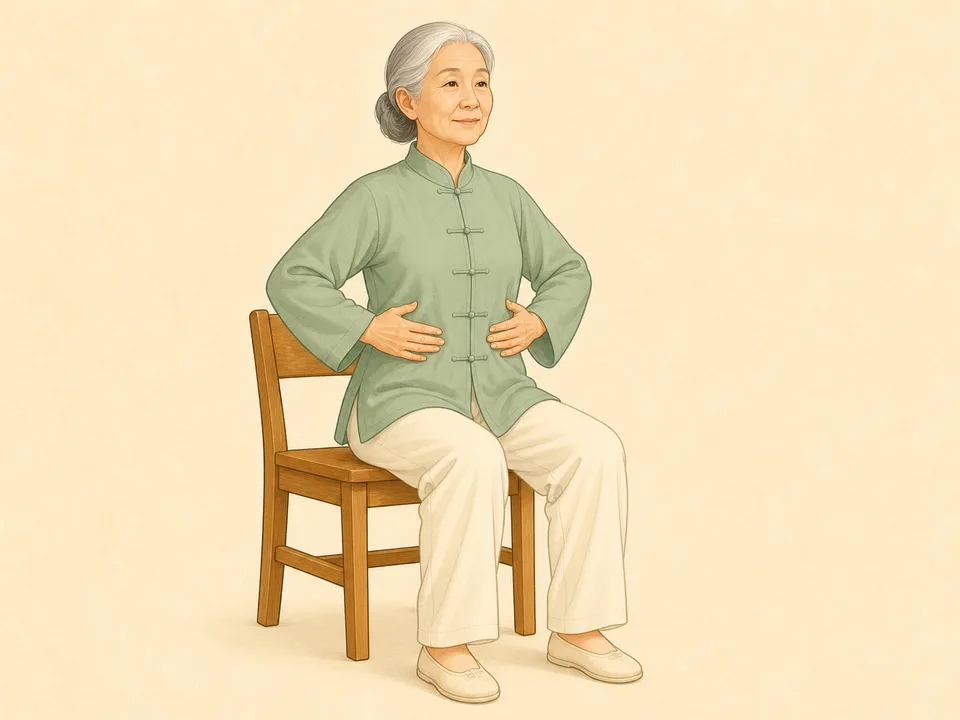 Move 01
Arrive and Breathe
Sit tall with both feet supported. Let your hands rest on your lower ribs and notice a comfortable, unhurried breath.
Helpful cue: Let the shoulders drop as you breathe out.
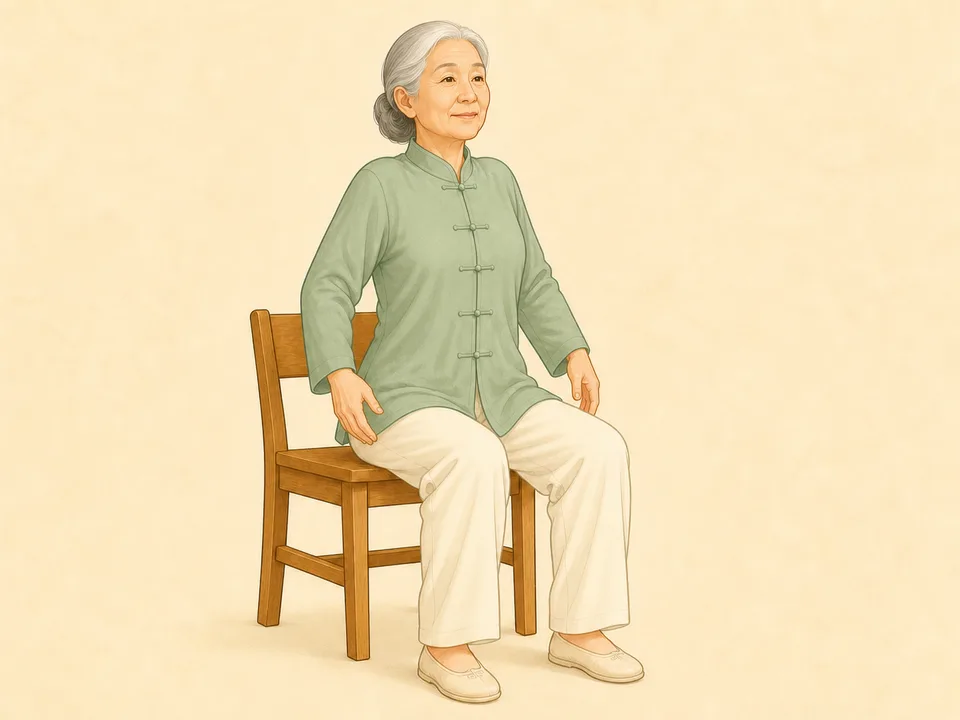 Move 02
Shoulder Opening
Circle both shoulders up, back, and down without forcing the range. Keep the neck long and the jaw soft.
Helpful cue: Small, smooth circles are enough.
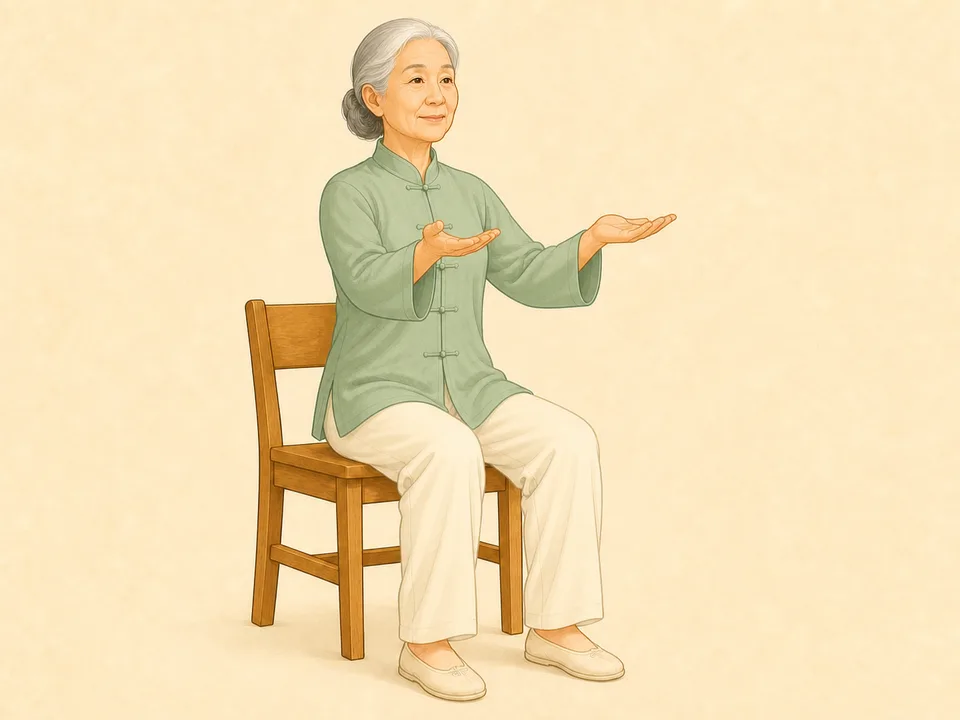 Move 03
Raise the Sky
Float both hands from your lap to chest height, palms facing up. Lower them slowly as if smoothing the air in front of you.
Helpful cue: Keep your elbows soft and below your shoulders.
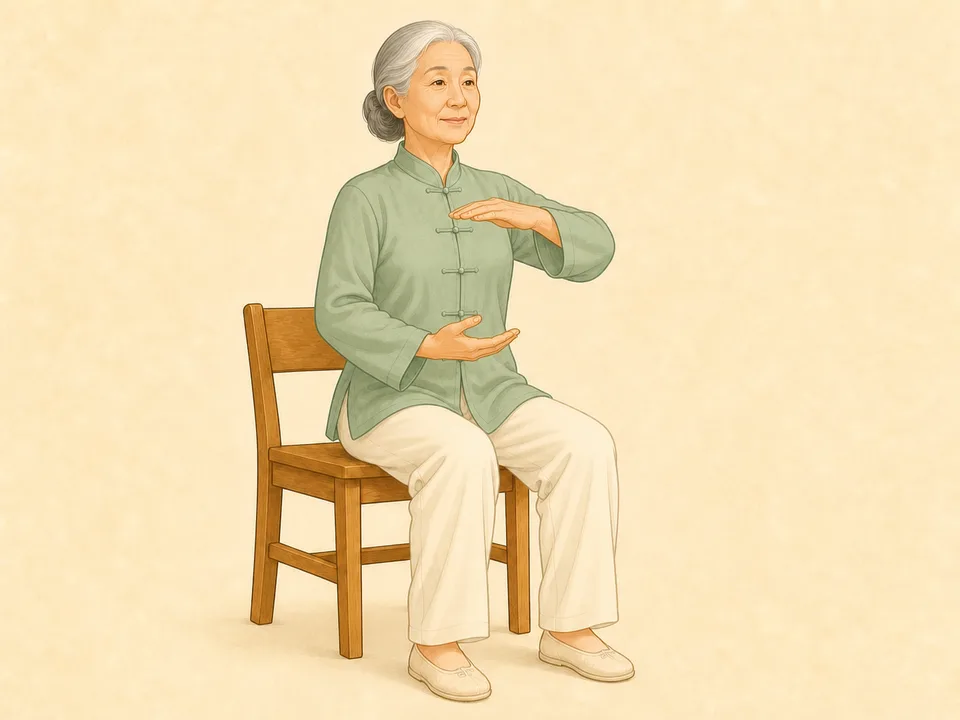 Move 04
Hold the Ball
Imagine holding a large, light ball in front of your chest. Move one hand above and one below, then switch sides with ease.
Helpful cue: Keep the movement rounded, never rigid.
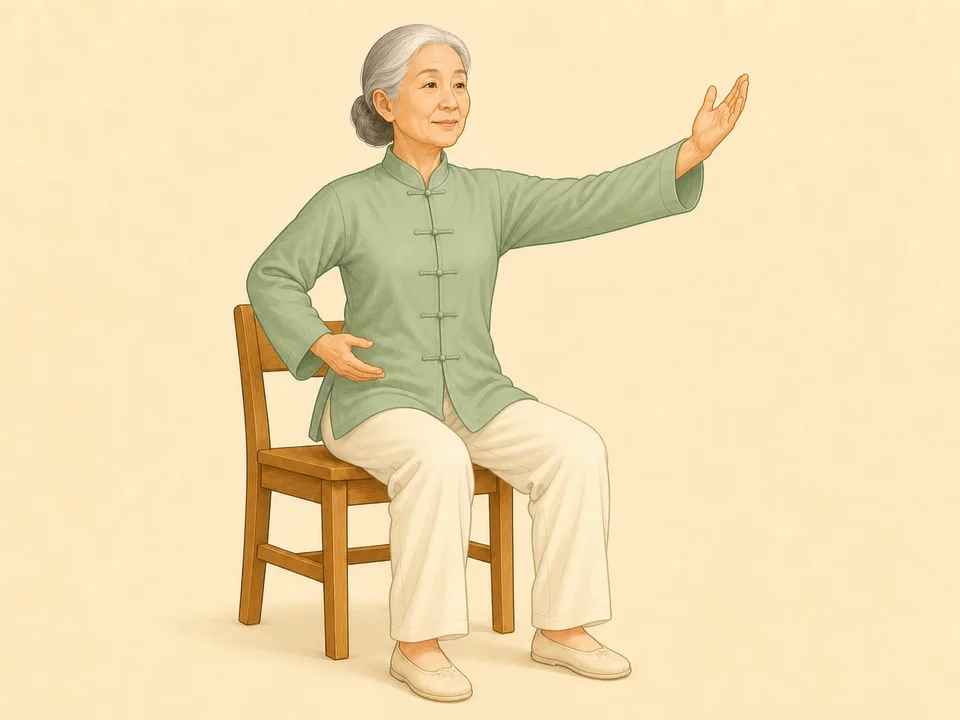 Move 05
Part the Wild Horse's Mane
From the ball shape, guide one hand diagonally forward and the other gently toward your hip. Return to center, then change sides.
Helpful cue: Turn only as far as your comfortable range allows.
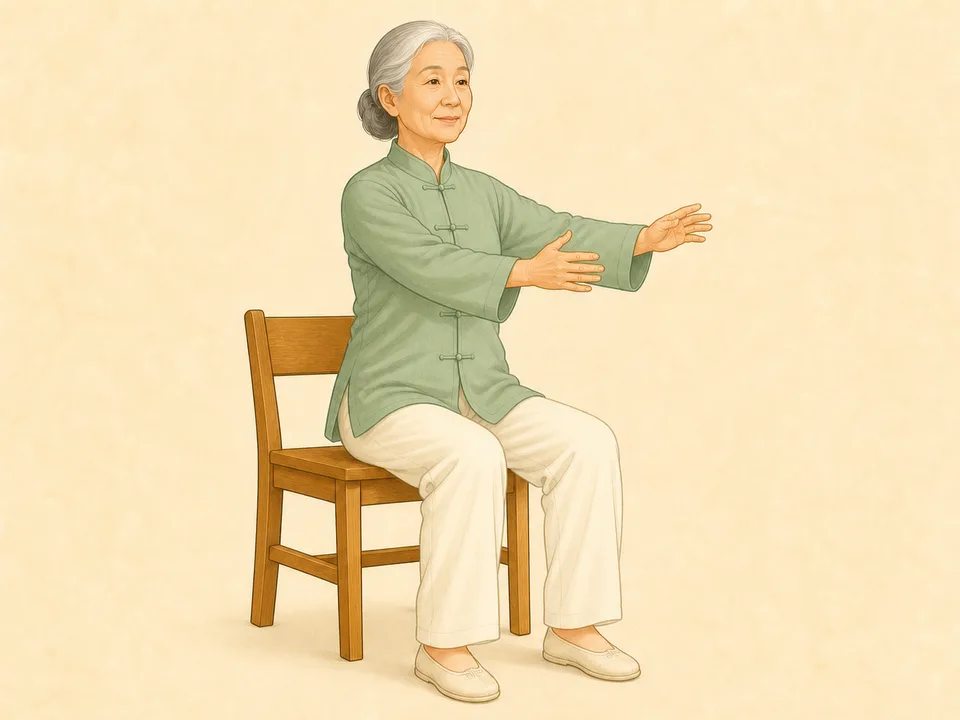 Move 06
Wave Hands Like Clouds
Move both hands slowly from one side of your body to the other, as if brushing across a soft cloud. Let your eyes follow the hands if that feels comfortable.
Helpful cue: Keep the motion level, quiet, and continuous.
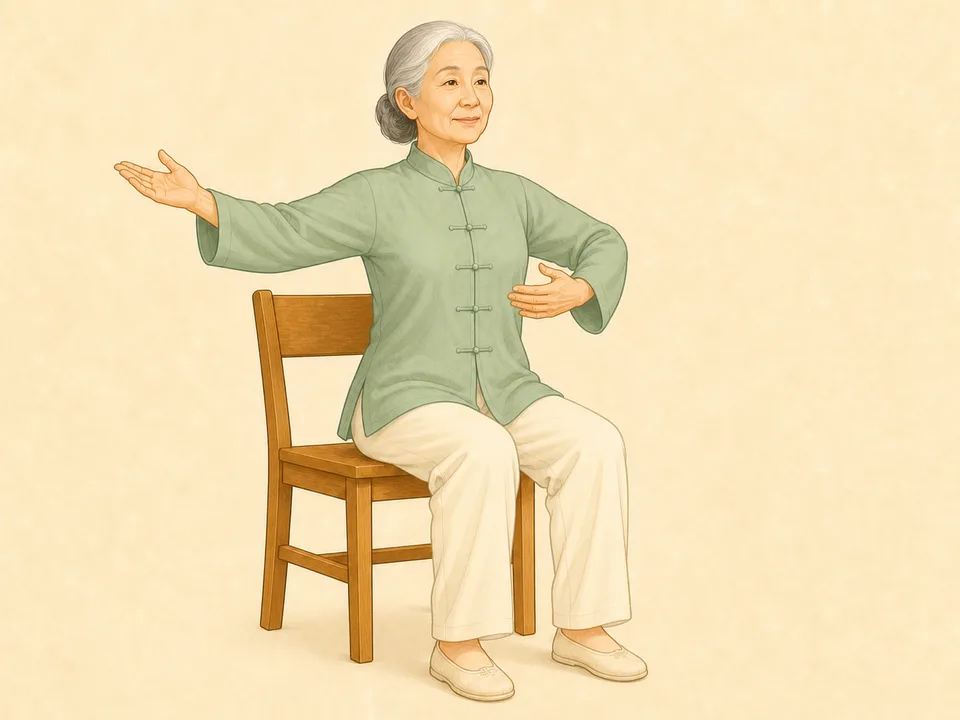 Move 07
White Crane Spreads Wings
Open one arm out to the side while the other hand floats near the opposite ribs. Return to center and repeat on the other side.
Helpful cue: Do not lift the arm above a pain-free height.
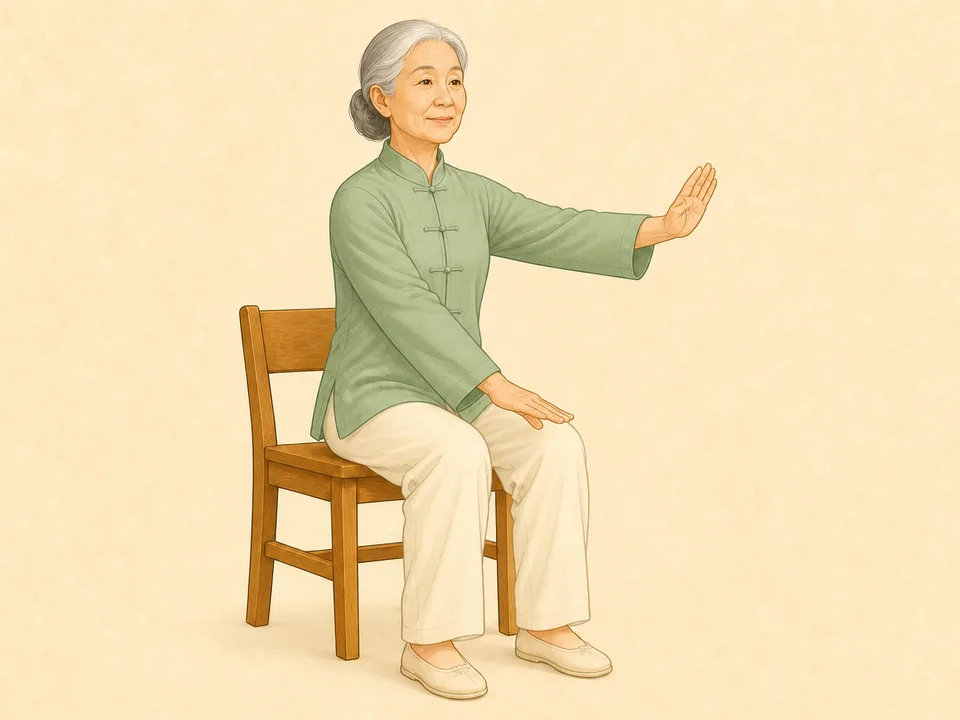 Move 08
Brush Knee and Push
Sweep one hand past the opposite knee while the other hand presses gently forward. Return both hands to the lap, then change sides.
Helpful cue: The push is soft, like moving a curtain.
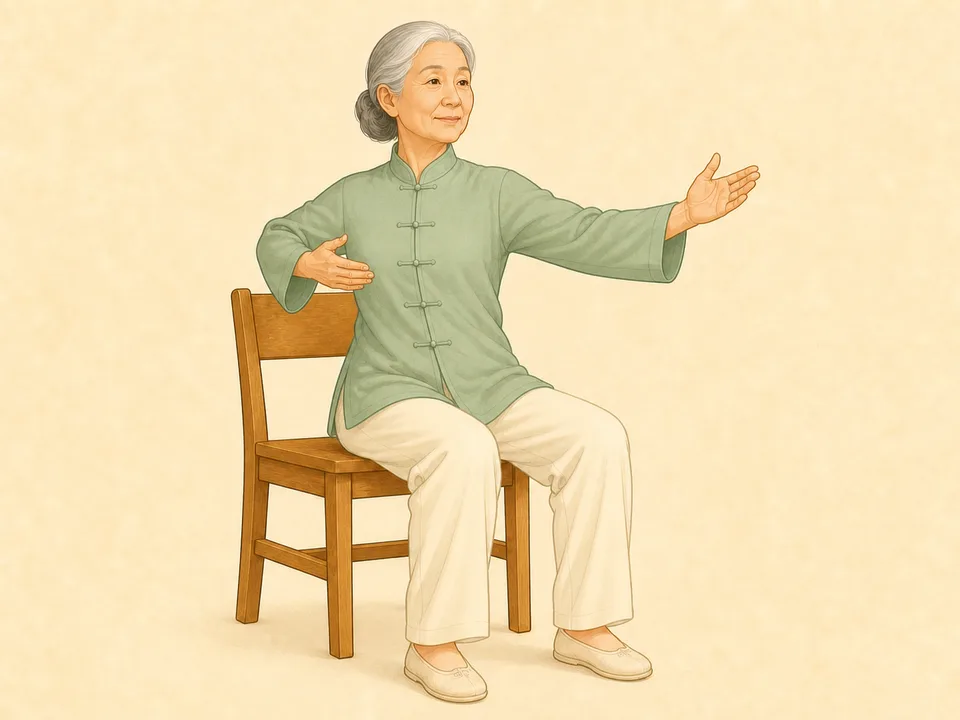 Move 09
Draw the Bow
Turn slightly to one side and draw one elbow back as the opposite hand reaches forward. Return to center and repeat the other way.
Helpful cue: Keep your ribs stacked over your hips.
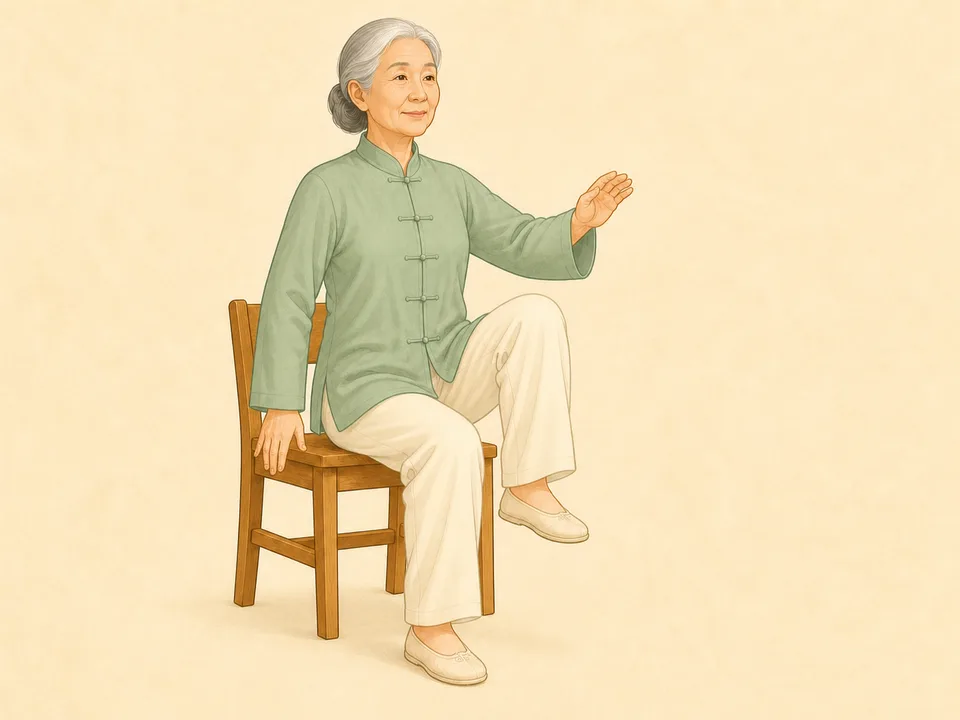 Move 10
Seated Golden Rooster
Lift one knee a few inches while the opposite hand floats up for balance. Lower with control and switch sides.
Helpful cue: Hold the chair if your balance needs extra support.
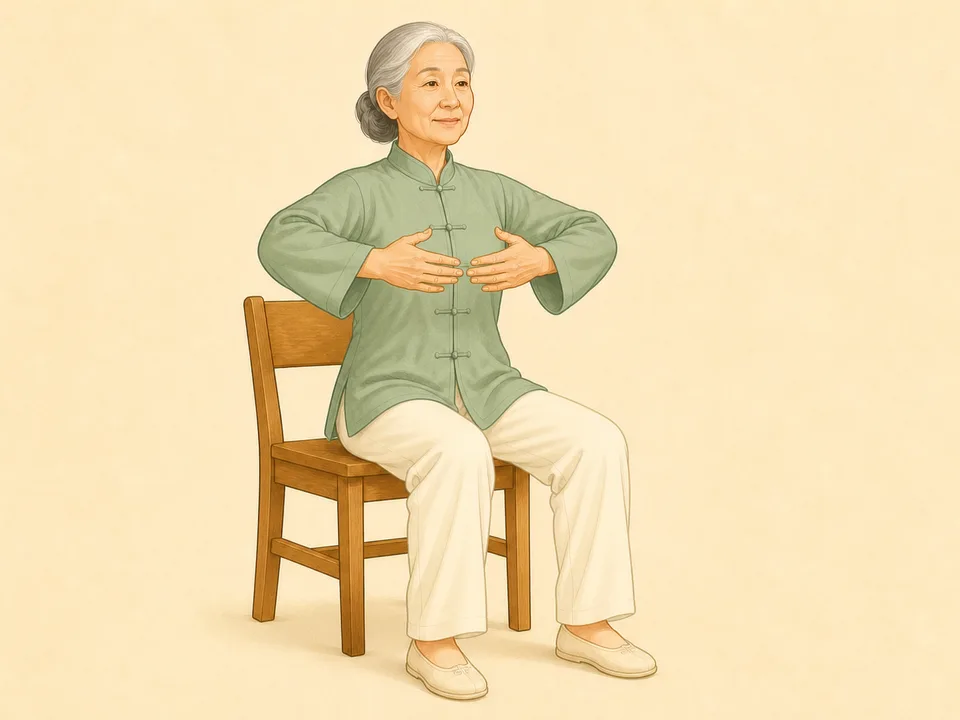 Move 11
Open and Close
Bring your hands together in front of the chest, then open them wide without shrugging. Return slowly, keeping the breath calm.
Helpful cue: Imagine creating space around the heart.
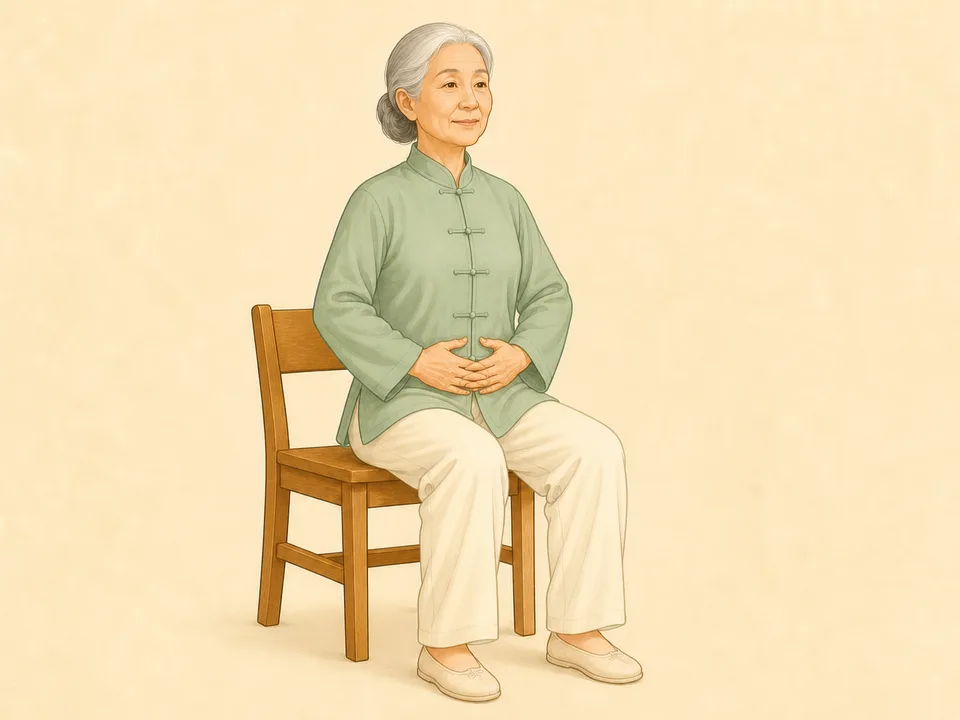 Move 12
Closing Breath
Rest your hands over your lower belly and feel your feet supported by the floor. Sit quietly for a few breaths before standing.
Helpful cue: Finish feeling steady, not tired.
A careful answer
Does chair tai chi work?
It can be useful for practicing gentle mobility, body awareness, breathing, and coordination. Research on tai chi more broadly suggests possible benefits for balance and well-being, but studies do not always test a chair-only routine. That is why this site describes seated tai chi as an adaptable practice, not a guaranteed treatment.
Read the chair tai chi benefits and evidence guide for links to NCCIH, Harvard Health, and the Arthritis Foundation. If your main goal is fall prevention, ask a clinician whether you also need supervised standing balance exercises.
Common questions
Chair tai chi FAQ
These quick answers cover safety, timing, equipment, arthritis, balance, and building a regular habit.
Is chair tai chi effective for seniors?
It can be a practical, low-impact way to practice tai chi principles. Evidence for tai chi generally is stronger than evidence for every chair adaptation, so use it as one part of a balanced movement plan.
How often should I practice?
Start with two or three short sessions each week. You may practice more often if your body responds well and you do not develop unusual pain or fatigue.
Do I need special equipment?
No. Use a sturdy chair without wheels, with both feet supported by the floor. Comfortable clothing is enough.
Can chair tai chi help balance?
It can help you practice posture, coordination, and body awareness. Because it is seated, it does not replace standing balance practice recommended by a clinician.
Keep this page handy
Your simple next step
Print the routine, place it beside your chair, and practice one calm movement at a time.