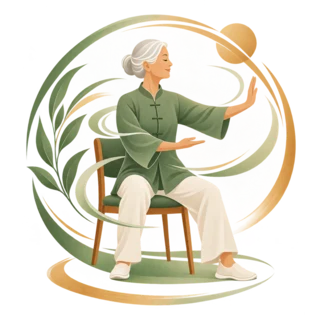
Chair tai chi may be a helpful way for seniors to practice gentle movement, breathing, posture, and coordination. The strongest research usually studies tai chi as a broader practice, not this exact 12-move seated routine, so the fairest answer is: it can be useful, but it is not a guaranteed treatment.
Tai chi asks you to shift attention, coordinate the arms and trunk, and control slow changes in posture. These are useful skills to practice. A seated version can help someone begin this work, but it cannot train every part of standing balance.
Comfortable mobility
Gentle range-of-motion work may help you move joints through a comfortable arc. For arthritis, the right amount of movement is individual; the aim is not to push through pain.
Stress and well-being
Slow breathing and focused movement can create a quiet pause in the day. People often value tai chi as a mind-body practice, but individual experiences vary and it should not be presented as a cure for anxiety, depression, or insomnia.
Trusted reading
What respected health sources say
These links are provided so you can read the source material yourself. They discuss tai chi generally and should not be read as proof that every chair routine produces the same results.
Ask your doctor or physical therapist for a personalized plan if you have new pain, recent surgery, frequent falls, fainting, severe dizziness, or trouble sitting upright.